By Jacob Brown, Editor-In-Chief
If you think “Godzilla” is just another movie about a giant monster destroying cities, you're missing the bigger picture.
After watching “Godzilla Minus One” in 2023 and now the new “Godzilla Minus Zero,” I can confidently say that these films offer something different from what many audiences have come to expect from the franchise. These films, made by TOHO, aren’t simply new installments where two giant monsters meet in the middle of a city and fight until one comes out on top. There's a much deeper story being told, one built around fear, trauma, humanity and the consequences of destruction.
And it's a story more people need to experience.
For years, Godzilla has been one of the most recognizable characters in cinema. The MonsterVerse films, including 2021’s “Godzilla vs. Kong” and 2024’s “Godzilla x Kong: The New Empire,” have given audiences plenty of action and spectacle. There's nothing wrong with enjoying those movies. Sometimes, watching giant monsters throw each other through buildings is exactly what people want.
However, there's an important distinction between these films that audiences should understand. Godzilla Minus One and Godzilla Minus Zero are Japanese productions from TOHO, the original studio behind Godzilla, while the MonsterVerse films are produced by Legendary Pictures. The creative direction is different, too. Both Japanese films are directed by Takashi Yamazaki, who also writes and oversees the visual effects. After winning an Academy Award for his work on Godzilla Minus One, Yamazaki returned to bring the next chapter to life. Having the same filmmaker lead both projects gives these movies a consistent vision and allows the story to develop beyond simply introducing another monster.
Instead of making the monsters the entire attraction, these films put humanity at the center of the story.
Godzilla isn't just a creature that shows up to give the audience an exciting action sequence. He's a representation of fear. His presence brings destruction, uncertainty and trauma to the people forced to live in his world. The fear isn't limited to the moment he appears on screen. It's about what happens to the people afterward, how they rebuild and how they continue living with the memories of what they've experienced.
That's something these films understand incredibly well.
One of the biggest challenges with a sequel is finding a way to build on the original without losing what made it special. “Godzilla Minus One” established that balance between an emotional human story and the terrifying spectacle of Godzilla. “Godzilla Minus Zero” manages to take that foundation and expand on it without forgetting what matters most.
The film delivers on the action, visual effects and larger-than-life moments audiences expect, but it never completely abandons the human story underneath it. There are moments when the destruction on screen is impressive, but what makes those moments meaningful is understanding what is at stake for the characters.
It's the difference between seeing a building collapse and understanding the lives being affected by it.
Another part of the experience that deserves recognition is the sound design. I watched the movie in Dolby Cinema, and I genuinely don't think I would want to experience it any other way. Yes, it was loud. But that's exactly the point.
The sound isn't simply there to make Godzilla's roar or the destruction of a city louder. It creates an atmosphere that makes the audience feel the weight of what's happening. The tension builds, and when Godzilla finally makes his presence known, you feel it. There is a difference between watching a monster on a screen and feeling like something that massive is standing right in front of you.
For a movie built around fear and destruction, that experience matters.
I think that's ultimately what people need to understand before dismissing these films as just another Godzilla movie. There's an entire story happening beyond the monster itself. The filmmakers understand that audiences can enjoy the spectacle while also being invested in the people caught in the middle of it.
You don't have to be a lifelong Godzilla fan to appreciate that.
If anything, I'd encourage people who have never been particularly interested in the franchise to give these movies a chance. You might walk into the theater expecting a giant lizard destroying cities, but you'll leave with something much more meaningful to think about.
Godzilla has always been capable of being more than a monster. These films are a reminder of that.
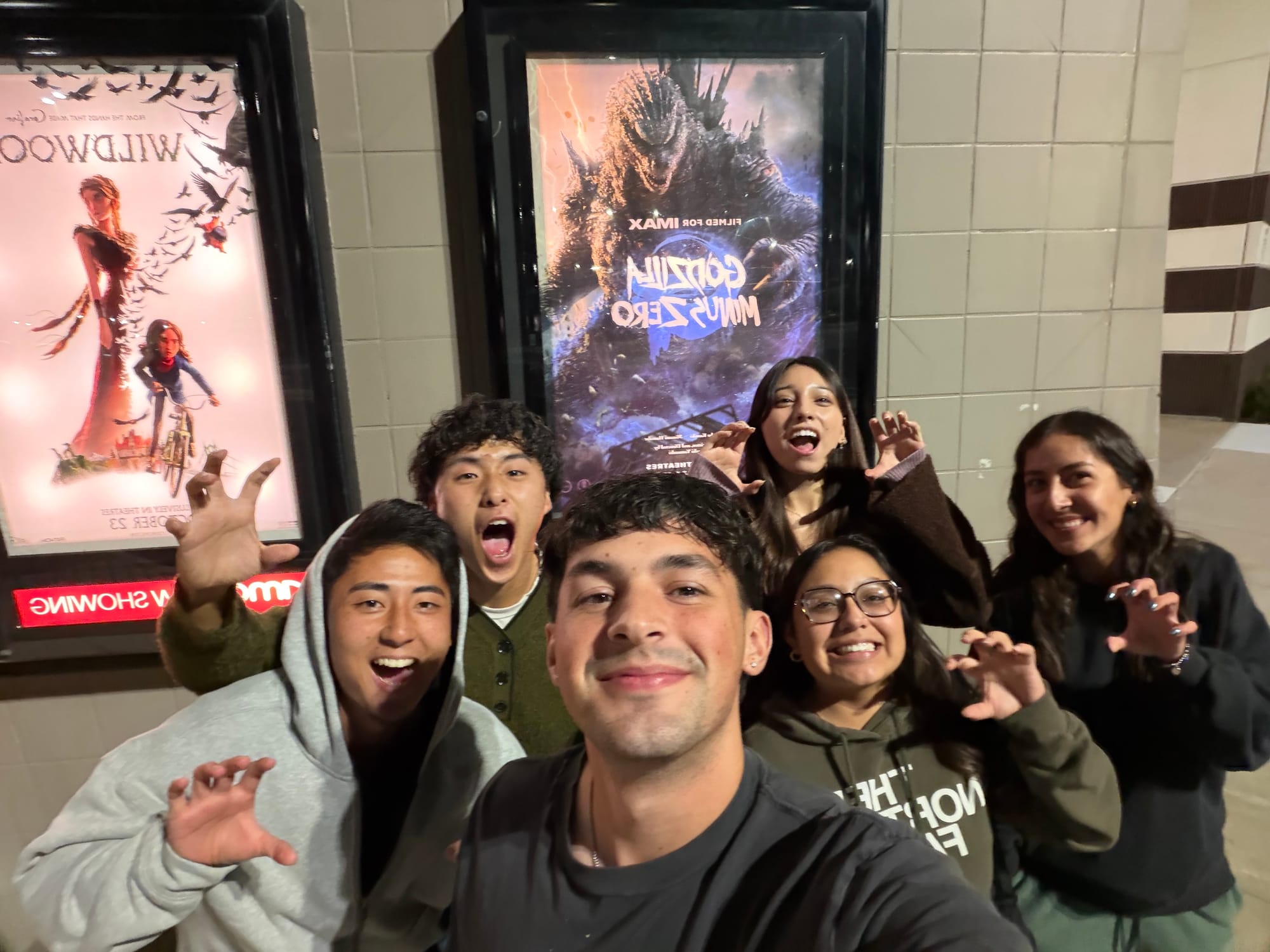
PHOTO: Jacob Brown, Editor-In-Chief